

Why Choose Us
Product Application
Our products can provide technical protection for the toughest of weather conditions. For AW21, we proudly produced functional garments for athletes from China, Japan, France and other European countries to participate in the 2022 Beijing Winter Games!
Our Certificate
We always feel that all success of our company is directly related to the quality of the products we offer. They meet the highest quality requirements as stipulated in SGS, JIS guidelines and our stringent quality control system. We have the BCSI and SLCP certificate.
Production Equipment
Our company has the latest state of the art equipment like a laser cutting machine, seam sealing machine, hot press machine, seam taping complement machine, water pressure instrument and heat-transfer printing machine.
Production Market
Our main markets are Japan, Europe and the U.S. Committed to constantly designing and developing new products, we are confident to meet all customers' requirements.
What is Rain Wear?
Rain wear, also known as rain gear or waterproof clothing, is designed to protect the wearer from precipitation and wind. It includes garments such as rain jackets, rain pants, and waterproof footwear, which are made using materials that prevent water from penetrating while still allowing perspiration to evaporate.
-
![Full Length Waterproof Coat]() Add to Inquiry
Add to Inquiry -
![Shell Rain Jacket for Men]() Add to Inquiry
Add to Inquiry -
![Rain Poncho Mens]() Add to Inquiry
Add to Inquiry -
![Rain Poncho Womens]() Add to Inquiry
Add to Inquiry

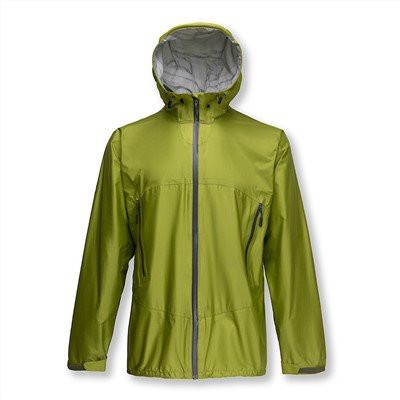


Seam taping
Because construction requires so many seams, a true rain jacket must be fully seam taped in order for it to be fully waterproof. Since all waterproof jackets are made this way, so you don't have to consider seam taping as part of your buying decision.
Zippers
From the front opening to pockets to pit zips, most jackets are loaded with zippers. Keeping water from seeping through zippers requires a rubberized coating or a storm flap. Coated zippers, also called laminated zippers, are harder to zip up and down. They also need a cover, often called a zipper hut or zipper garage, to shield the tiny opening at the end of the zipper track. The trend is away from full flaps in order to save weight, though coatings will eventually wear down and be less effective.
Hood design
Most hoods have brims and adjustments on the sides and in back in order to fine-tune the size of the opening. Jackets without those adjustments are intended for more casual uses. Some jackets also have hoods that zip off or roll and stow in the collar.
Vents
Because even the most breathable rainwear can get overwhelmed during strenuous activity, almost all backcountry rainwear has pit zips (underarm vents). Some jackets go a step further, having mesh liners in torso pockets that can double as additional vents.
Adjustment features
In addition to the hood adjusters noted above, jackets often have a drawcord at the bottom hem. Longer jackets might have a drawcord at the waist. Most technical rainwear will have wrist closures that adjust. All of these adjustments let you create tight closures to keep rain, wind and cold from sneaking into the openings of your jacket. The adjustments can also be loosened to increase overall jacket ventilation.
Pockets
Pockets, especially if they have waterproof zippers, will add to the price of a jacket. Some jackets have so many pockets that you might be tempted to forgo your pack. Other jackets have hand pockets placed above the hipbelt and away from the shoulder straps, so that you can access them while your pack is on.
Packability
Ultralight, nonbulky fabric always makes a jacket easier to pack. A few jackets go further, designing a pocket to double as a storage pouch.
Must-Have Features For Rainwear
Polyester is the gold standard for water-resistant outershell fabric, and it’s used on all the best rainwear. For one thing, it’s one of the most naturally water-resistant materials around—most moisture will roll right off its thick fiber weave.
When it’s rainy or snowy, synthetic insulation is the way to go for your outerwear. You’ve probably heard a lot about the power of down insulation, but in wet weather, synthetic insulation is made of fibers that absorb less water and dry faster.
A rainy day doesn’t just make it harder to work—It makes it harder to stay visible in dangerous conditions. That’s why high-visibility or HiVis clothing is so important in so many industries. In some, like road construction, it’s even required by OSHA rules.
If the rain is heavy enough, it can pound through the nooks and crannies in your jacket. That’s why lots of our jackets come with storm flaps—Material that fasten over the zipper or pockets on your jacket and protect you from rain.
Taffeta, a light fabric woven from polyester fibers, is the super-soft MVP of rainwear linings. Many of our best jackets for the rain, like our Lightweight Rainwear Jacket, use taffeta because it’s the ideal combination of comfortable warmth and breathability. Plus, it’s so light, you’ll forget you’re even wearing it.
Main Types Of Raincoat Fabrics
Silk Raincoat Fabrics
What makes silk rainwear so special? It’s the light weight and the elegant glossy finish, the soft hand and the gorgeous drape. Silk lovers know the benefits very well. Once you wrap yourself in this lustrous fabric, you feel and look feminine and luxurious. Solid or patterned, muted or bright – Choose from hundreds of color and prints.
Quilted Rainwear Fabrics
Quilting is a special processing technology. Fabric is stitched many times so that the threads form patterns — Geometric, abstract, etc. The stitch helps to keep the filler stationary, fixes the lining fabric. Quilted fabrics look understated and elegant. They keep you warm and comfortable due to the dense layer of padding.
Linen Raincoat Fabrics
Linen is an eco-friendly fabric with a smooth surface and a matte sheen. Treated with water-repellent, it doesn’t lose its unique look but gains flexibility and elasticity, doesn’t crease and retains shape well. Opt for wearable rainproof linen to create trendy and edgy power-pieces for rainy days.
Blended Raincoat Fabrics
Raincoats are often sewn from blended fabrics. The characteristic property of these materials is a combination of natural and synthetic threads forming a canvas.
Wool & Wool Blend Raincoat Fabrics
Wool is made waterproof and wind resistant without compensating on its distinctive softness and breathability.
High-Tech Raincoat Fabrics
These fabrics are 100% impervious to water. Made from premium artificial fibers, they are high-tech and wearable.
Coming across that one raincoat that is a perfect blend of both looks and usability is rare. Here are some tips you can follow choosing your raincoat:
Material: This is the most crucial thing to consider before selecting a particular raincoat. Always check if the raincoat you are buying is 100% waterproof. Always go for a raincoat fabric that is light and breathable. Such fabric is easier to pack in and carry around.
Fit: You need to ensure that the raincoat is neither too loose nor body-con. Make sure that you can wear 1-2 layers below your raincoat. Also, check if the shoulder width of the raincoat is comfortable enough for your body.


Length: To keep your body completely dry even during the heaviest downpours, go for raincoats that are full length or at least below the knee. The sleeve length has to be perfect. A longer sleeve covering your wrist can be inconvenient, and a shorter sleeve riding up your arm will not give complete rain protection.
Design Details: You will like your raincoat much better if it has additional accessories like a hood or some nice pockets. They don’t just instantly make you look smart but also make the raincoat more functional. A good hood will protect your hair from getting wet, and pockets are great for storage purposes.
Shade: Now, this might not seem to be very important. But you should consider it before you decide on that one perfect raincoat for yourself. You will be wearing your raincoat over your dress almost every single day during monsoons. Your raincoat must reflect your style.
Benefits of Having a Rain Mac Coat
Waterproof
One of the benefits of the rain mac coats is that they are waterproof. Most of these, by default, comes with waterproof capabilities as a standard. Either it is made with high-quality fabric, or it has a durable water-repellant coating of some kind. Any of these options are best to help repel water. It is possible to tell this on a rain mac coat when you are out on a hike, and as it rains, it forms little beads that roll-off. Meaning it is waterproof. For this reason, when you have this on as you walk your dog on an unsettling day or hopping from your car to a shopping mall. You are sure to have your torso and head staying dry. Thus, when you plan to buy a rain coat for women, ensure that it has the waterproof features.
Breathable
To add on, more to the waterproofing advantages of the rain mac coat. Most of them have the element of breathability that is a standard capability. This means it is made from fabric that has pores on it. Also, they are small enough to keep the water out and large enough to ensure that it allows heat and moisture out of our bodies. For instance, when you sweat. Hence, it helps keep your body comfortable and dry as well both from the inside and the outside. Notably, others have additional ventilation features that can aid in internal heat regulation. For instance, some of them have pit zips, these are zips underneath the armpits of your coat, and when you can get one with this, you will have an excellent rain mac coat.
Lightweight
Many rain mac coats by design are lightweight. The reason most of them are this way is to allow you to layer with other pieces on a cold day. So, even when you have a dark rain mac coat, you can give your overall ensemble a pop of color by layering with colorful pieces. This applies to when you want to tone down your look as well while wearing a bright rain mac coat. Put on a sweater, cardigan, hoodie, and add your rain mac coat over it. If your raincoat ticks the lightweight box it is a must-have for you, as they are made of very lightweight fabrics.
Easy to store
These versatile coats are not only beneficial due to the above characteristics, but they also come in handy as they are stowable. Many people do forget this benefit about the rain mac coats, but it is an important feature. As you can easily bundle them up and store them away neatly and efficiently. This advantage ties in with the lightweight option, since they are lightweight, they make it easy to stow away when need be. Also, due to how they are made, they can take up some abrasion and ruffle as a standard, and yet they will not lose any of their functional capabilities.
Fashionable
It is quite obvious that rain mac coats are pretty fashionable. This is in their day to day use. For instance, when you wear one to go for a hike, they tend to bestow a mild aura of freedom and adventure on the person wearing it. This is also applicable not only as you go for a hike, but a quick walk in the evening. Plus, many people find wearing these coats to be a stylish way to go out for a nature walk or for a quick hike to enjoy nature. All in all, someone out in good-looking hiking gear always feels like they are ready to face the wild and enjoy the freedom and tranquility that it provides.
Pockets and zippers
Not only for rain mac coats, but pockets and zippers are essential to any coat or jacket. Also, others have pockets that have waterproof zippers that make it pricier. Plus, they are beneficial to ensure that you stay dry. While for the zippers, most have a storm flap to prevent any water from leaking through. Nowadays, the flap is normally at the small opening at the end of the zipper coat. To ensure that the coat remains lighter in comparison to when they were using complete flaps.
Our Factory
Our main strengths lie in our wide range of expertise, outstanding quality, reasonable prices and short lead times. We have an experienced management team and strong sample development skills. Quality, speed, and competitive pricing are the core elements of our production. We ensure that all products are monitored and tested at each stage of the production process, and all finished items are under final inspection before packing. We accept small orders, capsule collections, OEM & ODM orders.

FAQ
We're well-known as one of the leading rain wear manufacturers and suppliers in China, featured by quality products and good service. Please feel free to buy bulk customized rain wear made in China here from our factory. Contact us for more details.
rainwear suit, plastic rain wear, pvc rain wear